
01
Website
Define public information, customer entry points, and the promises the product must support.
DIFFWISE.
Loading Diffwise.app.
Preparing your experience.
Choose a connected team when shared data, account rules, and release decisions need one owner across your website and app.
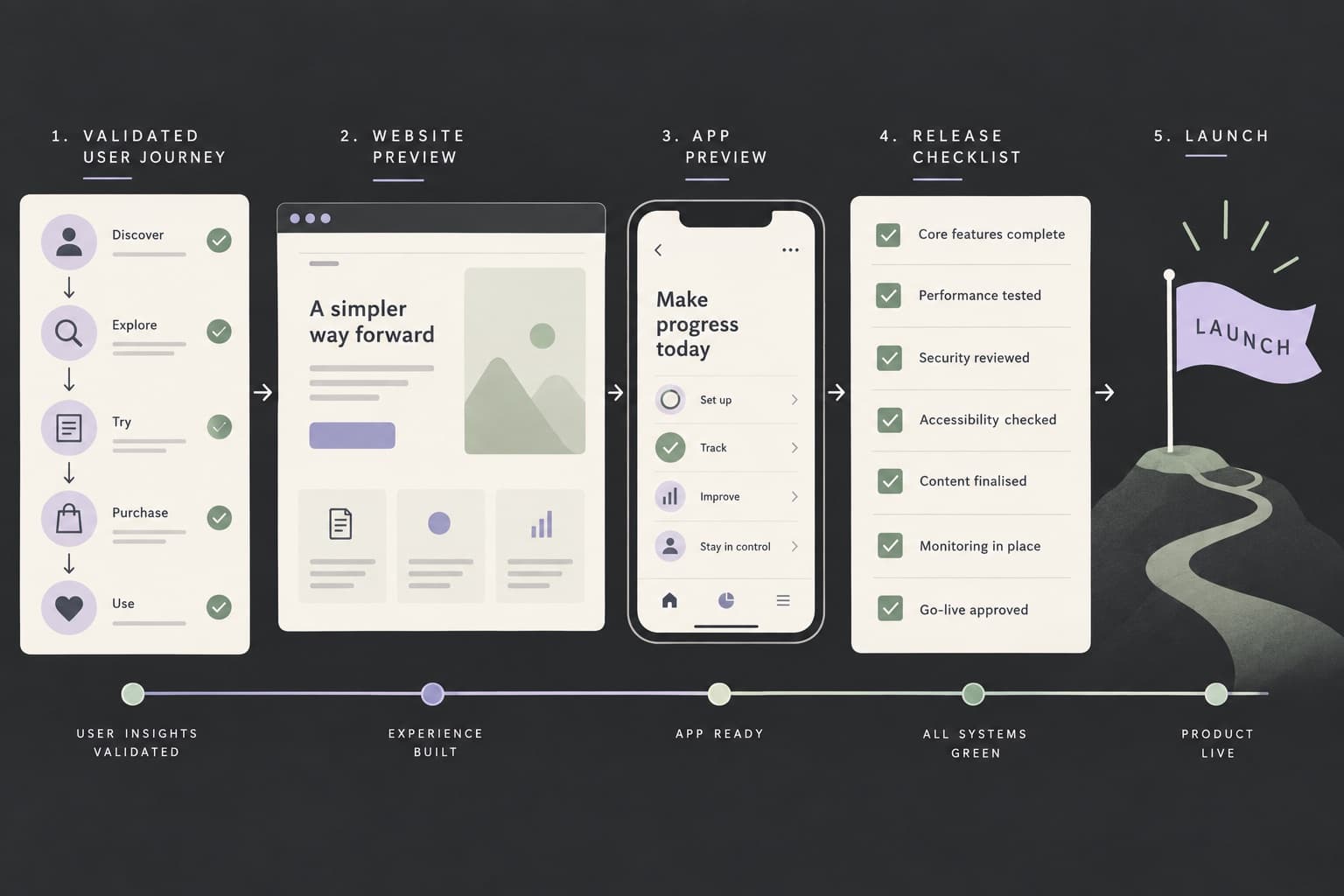
One team helps when the website, backend, and mobile app support the same customer journey. Diffwise.app scopes these connections together. Separate vendors can fit independent work with stable interfaces and an internal technical owner. Choose the delivery model around dependencies, not the number of suppliers.
A useful fit
Connected work
01
Define public information, customer entry points, and the promises the product must support.
02
Own shared records, permissions, validation, and integration behavior.
03
Complete focused tasks using the same account rules and product data.
A public page can promise a feature that the API does not support. An app can interpret a record differently from the backend. A changed field can leave one team waiting for another team’s release.
A hypothetical booking product accepts a request on the website but shows a different status in the app. Before implementation, we define which system owns the status and when each interface updates. One task review checks the complete path.
We define the meaning and owner of each shared record. We agree on account creation, roles, deletion, and recovery across the required surfaces. We test the same user task with different permissions.
One team does not mean every surface needs one codebase. The website and app can have separate release paths. The important agreement covers API contracts, supported versions, and responsibility when records disagree.
We list the changes that must arrive together and those that can ship separately. Backend changes need a plan for existing mobile versions. We define compatibility checks, migration steps, and rollback conditions.
The release checklist follows the customer from entry to completion. It includes failed requests and interrupted sessions. We record who approves the release and who investigates a failed task afterward.
Split work when it has a stable boundary and your team can coordinate the interfaces. A separate brand specialist can fit an approved identity task. A specialist review can fit a defined technical question.
Keep product decisions inside your organization when daily roadmap ownership is the main need. Multiple vendors require an internal owner for shared contracts and acceptance. One agency still needs that business owner; it cannot decide your priorities without you.
We define a journey map, data and permission decisions, interface scope, and an integration checklist. The agreed handover includes source access, operating instructions, release evidence, and known limits. We separate dependencies from optional features.
Bring existing URLs, product flows, system documentation, and ownership constraints to the first review. The plan can start with one surface when the other parts already work.
No. We identify dependencies and define which parts can release separately. The release plan must support existing users and app versions.
Yes, where its API and permissions support the agreed journey. We review the API, permissions, and operating constraints first. We propose changes only where the agreed journey needs them.
No. Your organization still owns business priorities and acceptance decisions. The agency coordinates delivery within those decisions.
Yes. Define the interface, handover evidence, and decision owner before dividing the work.
Tell us what you want to build or improve. We will help you find a useful next step.